
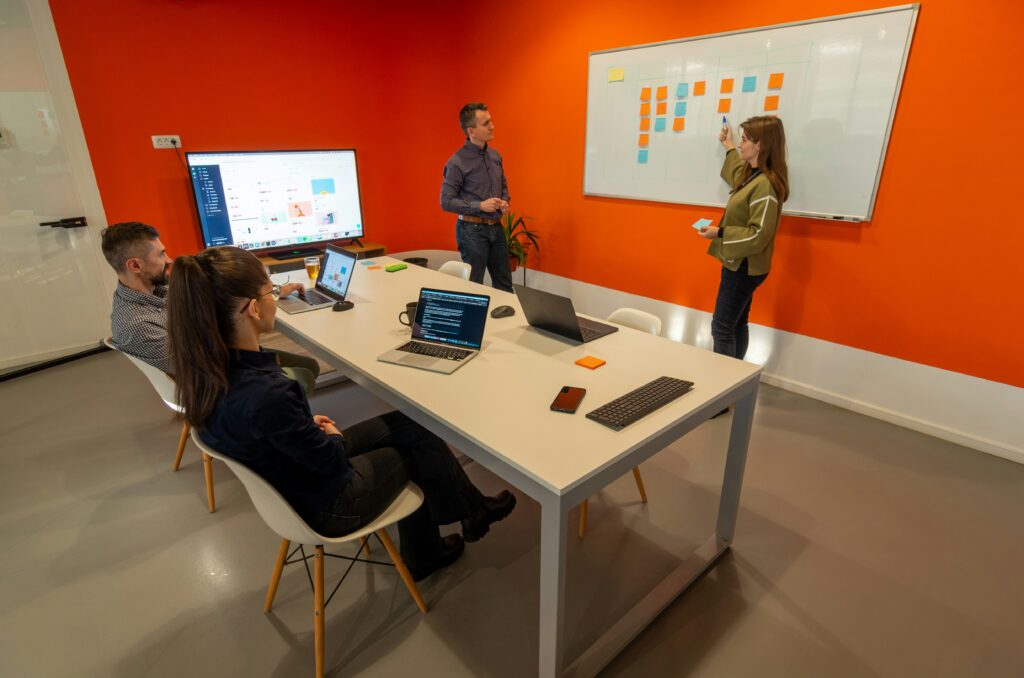
The Evolving Landscape of Workplace Productivity
For decades, businesses have sought tools to enhance team collaboration, moving from basic email and shared drives to integrated suites offering messaging, video conferencing, and document sharing. While platforms like Slack, Microsoft Teams, and Google Workspace have become indispensable, the demand for more intelligent, proactive, and interconnected systems continues to grow. The challenge for many organizations has been the fragmentation of tools, leading to ‘app fatigue’ and inefficiencies in switching contexts. This fragmentation has paved the way for a new generation of apps designed to tackle these very issues, making workflows smoother and more intuitive.
Key Innovations Driving Next-Gen Smart Collaboration Tools
AI-Powered Workflow Automation and Insights
The most significant leap in modern collaboration tools comes from the strategic integration of artificial intelligence. AI is moving beyond simple chatbots to become a powerful assistant, capable of proactive suggestions, generating meeting summaries, prioritizing tasks, and analyzing communication patterns to identify bottlenecks. For instance, features like Microsoft Copilot and Google Workspace’s Duet AI are embedding generative AI directly into documents, presentations, and communication channels. They can draft emails, summarize lengthy threads, or even suggest follow-up actions, significantly reducing manual effort and freeing up employees to focus on strategic tasks.
According to a recent report by McKinsey, companies that adopt AI in their operations are projected to see significant productivity gains, often exceeding 10-15%. This isn’t just about speed; it’s about making work smarter, leveraging data to inform decisions, and automating repetitive elements of project management and communication. The ability of these tools to learn from user interactions and anticipate needs marks a pivotal shift in how we approach daily tasks.
Seamless Integration Ecosystems
Modern work relies on a vast array of specialized applications, from CRM and ERP systems to project management and development tools. Next-gen smart collaboration platforms are designed not as standalone solutions but as central hubs that seamlessly integrate with hundreds, if not thousands, of other business applications. This creates a unified workspace where information flows freely between different systems, eliminating data silos and reducing the need for constant context switching. Imagine initiating a video call, sharing a document, and updating a CRM record all from within a single interface – this level of integration is becoming the standard. This approach streamlines digital transformation efforts and provides a comprehensive view of ongoing projects and tasks.
Enhanced Security and Compliance Features
As collaboration becomes more interconnected and global, the importance of robust security and compliance cannot be overstated. Next-gen tools are built with enterprise-grade security at their core, offering end-to-end encryption, advanced access controls, identity management, and comprehensive data governance features. Companies operating in regulated industries, such as finance or healthcare, can now rely on these platforms to handle sensitive corporate data securely while adhering to strict compliance standards like GDPR, HIPAA, and ISO 27001. This focus on security builds trust and ensures that the benefits of enhanced collaboration don’t come at the cost of data integrity or privacy.
Impact on Businesses and the Future of Work
The rise of these smart collaboration tools is having a profound impact on businesses worldwide. Organizations are reporting enhanced decision-making capabilities due to better access to real-time information and AI-driven insights. Team cohesion improves as communication barriers are broken down, and remote or hybrid work models become more efficient and inclusive. Project delivery cycles are shortened, and the overall reduction in manual, administrative tasks allows employees to engage in more creative and high-value work.
Experts like Satya Nadella, CEO of Microsoft, have emphasized that AI will fundamentally change how we interact with software, making tools more intelligent and proactive. The future of work will likely involve even deeper AI integration, with hyper-personalization of workspaces, predictive analytics guiding daily tasks, and immersive collaboration experiences becoming commonplace. As these technologies mature, they will not just augment human capabilities but redefine the very structure of teamwork and productivity.
In conclusion, smart collaboration tools are no longer just about enabling communication; they are strategic assets that drive efficiency, foster innovation, and provide a competitive edge. By harnessing AI, deep integrations, and robust security, these platforms are transforming how businesses operate and empowering teams to achieve unprecedented levels of productivity and success.