
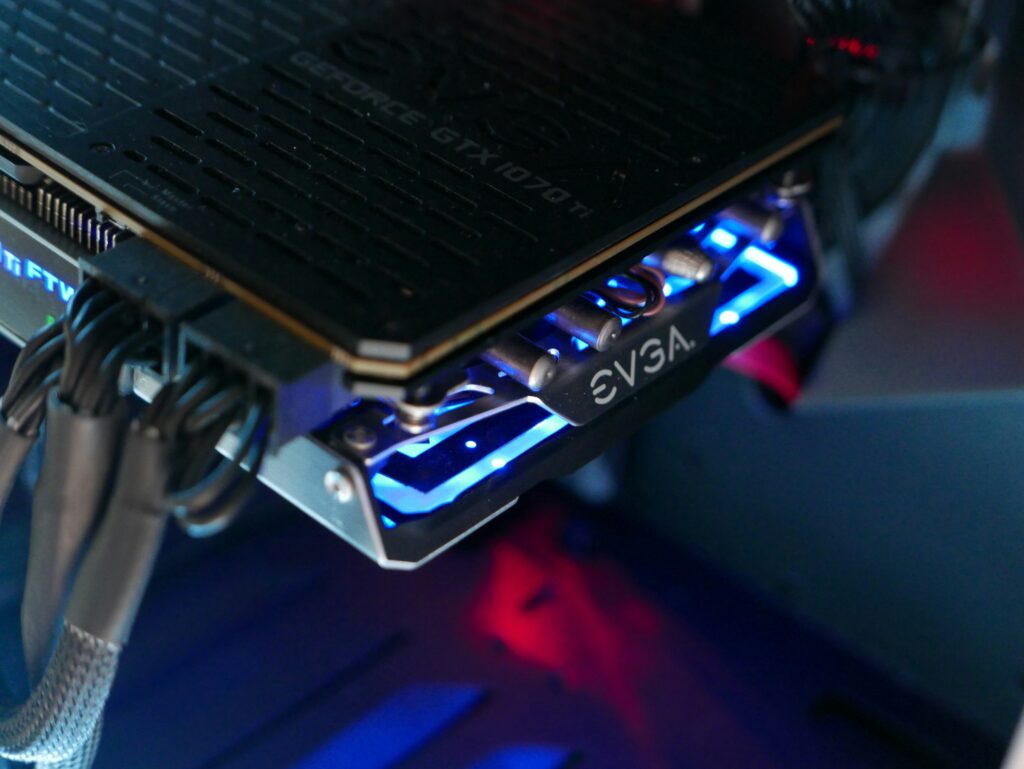
The Current Landscape and What’s Next for Graphics
For years, the battle for graphical supremacy has been spearheaded by titans like Nvidia and AMD, each pushing the boundaries with their latest architectures. Nvidia’s Ada Lovelace (RTX 40 series) and AMD’s RDNA 3 (RX 7000 series) currently offer remarkable performance, enabling stunning visuals and high frame rates. Yet, the gaming community’s hunger for more, especially in demanding scenarios like 4K resolution with ray tracing, never ceases.
Rumors and whispers surrounding Nvidia’s upcoming Blackwell architecture, while initially highlighted for its immense power in data centers and AI workloads, invariably signal what’s to come for consumer gaming GPUs. These next-generation chips are expected to feature significant architectural enhancements, promising substantial boosts in traditional rasterization, dramatically improved ray tracing capabilities, and more sophisticated AI-driven features like advanced DLSS iterations. The core advancements developed for AI will inevitably trickle down, enhancing gaming performance in ways we are only beginning to imagine.
Unleashing Unprecedented Performance and Realism
Next-Level Ray Tracing and Path Tracing
Future Gaming GPUs are projected to make monumental strides in real-time ray tracing. While current generations offer impressive ray-traced effects, the computational demands remain immense. Next-gen hardware aims to alleviate this bottleneck, moving closer to practical real-time path tracing in games. This evolution means hyper-realistic lighting, reflections, and shadows that mirror the real world, blurring the lines between virtual and reality, a level of fidelity previously reserved for pre-rendered cinematic productions.
Imagine game environments where every light source interacts precisely with every surface, creating dynamic and nuanced scenes that respond authentically to changes. This level of graphical complexity will allow game developers to craft worlds with unparalleled visual depth and immersion, pushing past the limitations of rasterization techniques.
AI-Powered Gaming Experiences
Beyond simply upscaling resolutions with technologies like DLSS, future GPUs are expected to integrate even more powerful and sophisticated AI cores directly into their architecture. This isn’t just about making games look better; it’s about fundamentally changing how they are developed and played. Enhanced AI could lead to more intelligent and adaptive Non-Player Characters (NPCs), dynamically generated game worlds that respond to player actions in real-time, or even procedural content generation within games, all accelerated by the GPU’s dedicated AI capabilities.
This integration of AI at the hardware level promises to unlock new gameplay mechanics and narrative possibilities, making game worlds feel more alive, reactive, and personalized than ever before. It signifies a shift from static game elements to dynamic, AI-driven experiences.
Industry Impact and Developer Opportunities
The arrival of Next-Gen Gaming GPUs will serve as a catalyst for innovation across the entire gaming industry. Game developers will be compelled to push their creative and technical boundaries further, leading to the emergence of new development tools and game engines designed to fully exploit this newfound power. This will usher in a new era of graphical fidelity, complex physics simulations, and expansive, detailed environments, ultimately redefining user expectations for immersive gaming.
However, increased complexity and resource demands will also present significant challenges, requiring developers to master optimization techniques and smart asset management to deliver stable and engaging experiences across a broader range of hardware. For those looking to build systems ready for these advancements, understanding component compatibility is key. Check out our guide on Choosing the Best Gaming Monitor to ensure your display can keep up with future GPU power.
The Road Ahead: Predictions and Challenges
Analysts universally predict a continued arms race in GPU performance, but with an increasing emphasis on efficiency. Power consumption and thermal management will remain critical design challenges, as manufacturers strive to deliver more power in manageable form factors without turning gaming PCs into power-hungry furnaces. Innovations in cooling solutions and power delivery will be crucial.
Pricing strategies will also be a key battleground. Manufacturers will need to balance the cost of cutting-edge technology with market accessibility, especially as the cost of research and development continues to climb. The looming competition from AMD’s RDNA 4/5 and Intel’s Battlemage/Celestial architectures is expected to drive innovation and potentially help stabilize pricing across the high-end market, benefiting consumers in the long run.
Expert opinions from leading tech publications often highlight the increasing role of hardware-software co-development to fully exploit new architectures. For instance, recent reports from The Verge frequently discuss NVIDIA’s ongoing efforts to integrate AI acceleration deeper into their hardware pipeline, requiring game developers to adapt their tools and workflows to truly leverage these capabilities.
Conclusion: A Glimpse into Gaming’s Future
The anticipation for Next-Gen Gaming GPUs isn’t merely about achieving faster frame rates or higher resolutions; it’s about unlocking entirely new dimensions of gaming and interactive entertainment. From hyper-realistic visuals and physics to AI-driven interactions that make virtual worlds more believable, the future promises a profoundly transformative experience. Gamers and developers alike stand on the cusp of an exciting new chapter, ready to explore what these powerful new components will enable in the dynamic world of digital entertainment.