
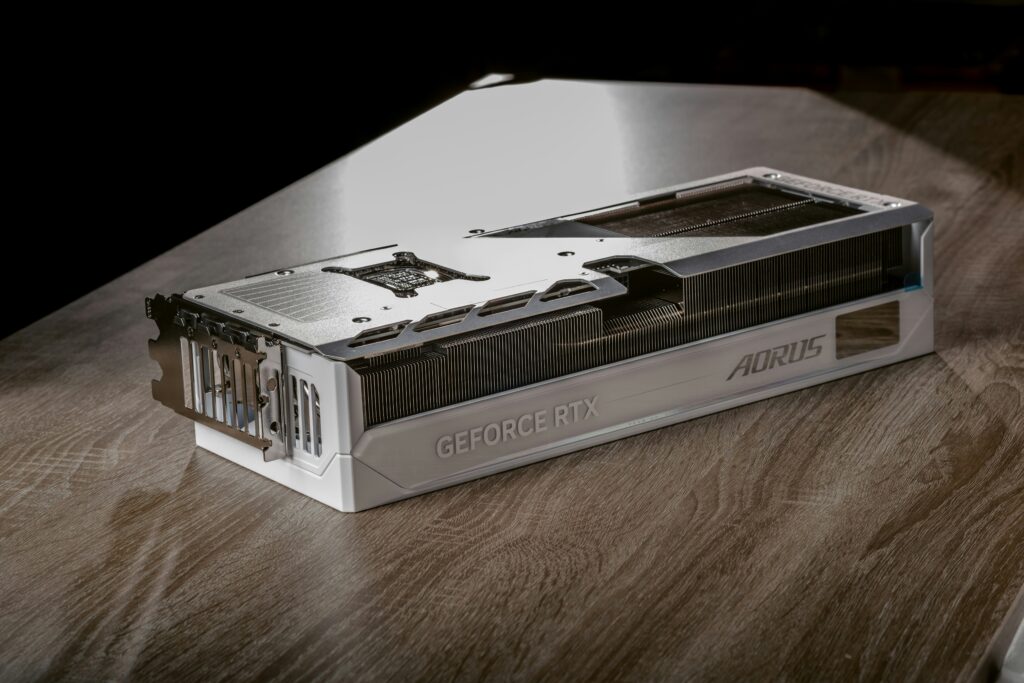
Recent whispers from industry insiders and reputable leakers have ignited fervent discussions across tech communities. While NVIDIA has yet to make an official announcement, the consensus points towards the highly anticipated RTX 5000 Series, powered by the Blackwell architecture, potentially arriving in late 2024 or early 2025. These leaks, primarily from sources known for their accuracy in past hardware predictions, detail specifications that could dramatically alter the landscape of consumer and professional GPUs.
Blackwell Architecture: A Closer Look at the Leaked Specs
At the heart of the RTX 5000 Series is the Blackwell architecture, rumored to succeed the current Ada Lovelace (RTX 4000 series). Key speculations include a significant increase in CUDA cores, potentially pushing well beyond the 18,432 cores found in the RTX 4090. Memory specifications are also a major talking point, with predictions suggesting the adoption of faster GDDR7 memory, offering substantial bandwidth improvements over GDDR6X. This would translate to unparalleled data transfer rates, crucial for rendering ultra-high-resolution textures and complex scene geometries.
Reports indicate that NVIDIA is likely to leverage a more advanced manufacturing process, possibly TSMC’s 3nm or a refined 4nm node. This move would allow for higher transistor density, improved power efficiency, and ultimately, greater performance within similar or even lower power envelopes compared to previous generations. The flagship model, often referred to as the ‘RTX 5090’, is expected to feature a much wider memory bus, potentially up to 512-bit, paired with a massive amount of VRAM, cementing its position at the pinnacle of graphical performance. You can often find early insights into such hardware developments by following major tech news outlets like The Verge.
Impact on Gaming, AI, and Professional Workflows
The implications of the RTX 5000 Series are vast. For gamers, this means a significant boost in performance, making true 4K gaming with ray tracing and path tracing at high frame rates a more accessible reality. New levels of visual fidelity, more realistic lighting, and complex physics simulations will become standard, pushing game developers to create even more immersive worlds. The enhanced processing power will also benefit virtual reality and augmented reality applications, offering smoother experiences and more detailed environments.
Beyond gaming, the Blackwell architecture is poised to have a profound impact on professional workflows. Applications in 3D rendering, video editing, animation, and architectural visualization will see dramatic reductions in rendering times. Engineers and researchers working with complex simulations, data analysis, and machine learning models will also benefit immensely from the increased computational power and memory bandwidth. While not an AI-specific category, the raw power of these GPUs significantly accelerates AI training and inference on local machines, making advanced computational tasks more efficient for businesses seeking to optimize their operations. For a broader look at how such powerful hardware fits into the larger ecosystem, explore articles on high-performance computing trends on ByteTechScope.
The Future of Hardware and Expert Predictions
Industry analysts predict that the RTX 5000 Series will not just be an incremental upgrade but a generational leap, similar to the transition from Pascal to Turing or Ampere to Ada Lovelace. This continuous innovation from NVIDIA underscores the relentless pursuit of performance in the tech sector. Experts suggest that the competitive landscape will intensify, pushing AMD to innovate further with its RDNA 4 architecture. Challenges remain, particularly concerning power consumption and cooling solutions for these increasingly powerful components, which will require advancements in PC case design and cooling technology.
The advent of these next-gen GPUs will also drive innovation in software development, enabling new graphics APIs and rendering techniques that fully exploit the hardware’s capabilities. It’s a symbiotic relationship where hardware pushes software, and software demands more from hardware, creating an exciting cycle of technological progress.
In conclusion, while official details are still under wraps, the leaked specifications of NVIDIA’s RTX 5000 Series paint a picture of a revolutionary leap in graphics processing. This upcoming generation promises to push the boundaries of visual computing, offering unprecedented performance for both entertainment and professional applications, and setting new benchmarks for the entire industry.