
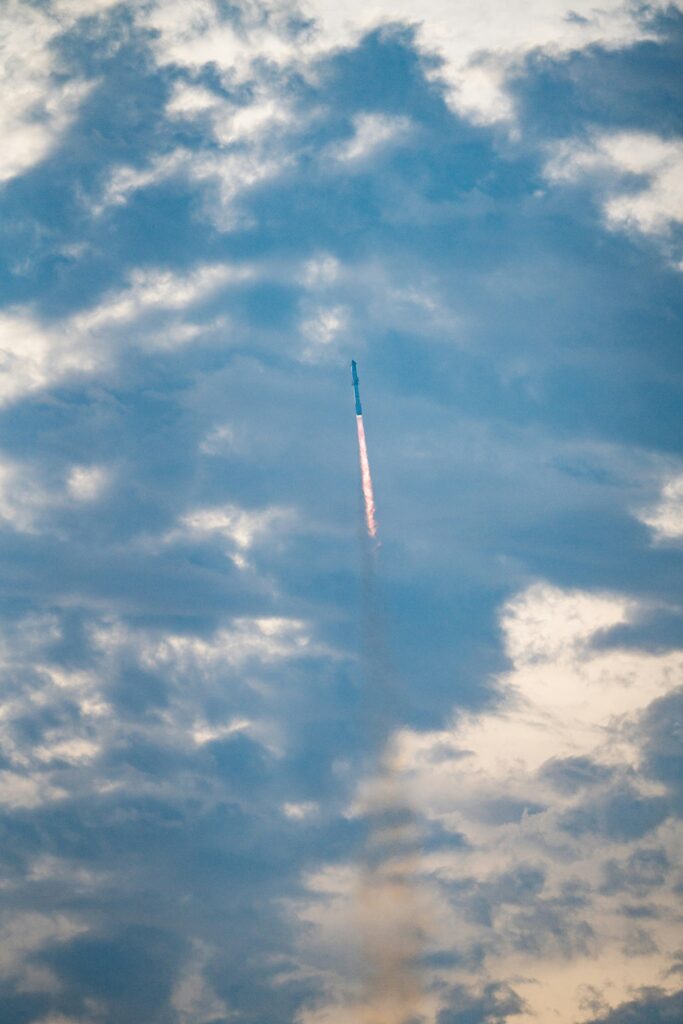
The New Space Economy Takes Flight
The dawn of the 21st century has witnessed a dramatic shift in humanity’s engagement with space. No longer solely the domain of national governments and large aerospace contractors, the ‘New Space Economy’ is now largely driven by agile, innovative **Space Tech Startups**. These companies are democratizing access to space and its vast potential, attracting unprecedented venture capital. In 2023 alone, private investment in space ventures globally surged past $15 billion, with early indicators for 2024 suggesting an even more robust funding landscape, pushing boundaries from reusable rockets to advanced satellite constellations.
This paradigm shift is fueled by several factors: decreasing launch costs, miniaturization of technology, and a growing demand for space-derived data and services. Entrepreneurs are seizing opportunities to innovate in areas previously deemed too complex or capital-intensive for private entities, fostering a vibrant ecosystem of deep tech innovation.
Data-Driven Growth: Investor Confidence Soars
Investor confidence in **Space Tech Startups** is at an all-time high, backed by compelling market data and robust growth forecasts. Reports from leading investment firms tracking the space sector, such as Space Capital, highlight consistent year-over-year growth in private space investment, underscoring its long-term viability. This capital is flowing into diverse segments, including launch services, satellite manufacturing, earth observation, in-orbit servicing, and next-generation communication networks.
Venture capitalists are drawn to the potential for significant returns, recognizing that space technology is foundational to numerous terrestrial industries. As commented by a partner at a prominent deep tech VC fund, “The ability of space tech to provide invaluable data and connectivity means it’s not just a niche market; it’s an essential enabler for global economic growth and sustainability across virtually every sector.” This strategic outlook positions space ventures as a critical component of future economic infrastructure.
Disrupting Terrestrial Industries from Above
The impact of **Space Tech Startups** extends far beyond the cosmos, fundamentally disrupting and enhancing various industries on Earth. Their innovations are creating solutions with immediate and far-reaching benefits:
- Global Communication: The proliferation of low Earth orbit (LEO) satellite constellations is making high-speed, low-latency internet access available in even the most remote regions, bridging the digital divide and powering new business models.
- Logistics & Navigation: Enhanced GPS and real-time satellite tracking capabilities are revolutionizing supply chain management, enabling more precise logistics, and improving the safety and efficiency of autonomous vehicles across land, air, and sea.
- Climate Monitoring & Agriculture: High-resolution Earth observation satellites provide critical data for climate change research, disaster response, and precision agriculture. Farmers can optimize crop yields, monitor soil health, and manage water resources more efficiently, contributing to global food security.
- Defense & Security: Advanced satellite imagery and space domain awareness technologies offer unparalleled capabilities for national security and international stability, providing critical intelligence and monitoring.
For businesses looking to harness these advancements, understanding the capabilities offered by these innovative startups is paramount. Integrating space-derived data and services can unlock new operational efficiencies, inform strategic decisions, and create entirely new product offerings. You can learn more about leveraging data for business growth on ByteTechScope’s blog.
A Future Beyond Earth: What Lies Ahead?
The current advancements are just the beginning. The future for **Space Tech Startups** promises even more ambitious endeavors. Predictions include the expansion of a lunar economy, with private companies developing infrastructure for sustainable presence on the Moon, including resource extraction and scientific outposts. Asteroid mining, though still in its nascent stages, represents another frontier of potential, promising access to rare metals and minerals.
The challenges are significant—ranging from regulatory complexities and orbital debris management to the sheer capital intensity required for deep space missions. However, the rapidly evolving technological landscape and increasing private sector involvement are driving down costs and accelerating innovation. Experts believe that automation, advanced robotics, and artificial intelligence (used as a tool within these ventures, not as the category focus) will play crucial roles in scaling these operations, making complex missions more feasible and economically viable.
As these startups continue to mature, they will not only create new industries but also redefine our relationship with space, moving from mere observation to active utilization and expansion. The strategic importance of establishing a robust space infrastructure for future generations cannot be overstated, making these investments foundational for global progress.
Conclusion
The surge in funding and innovation among **Space Tech Startups** marks a pivotal moment in technological history. These enterprises are demonstrating an extraordinary capacity to innovate, attract capital, and deliver solutions that are transforming both our terrestrial and extraterrestrial horizons. From enabling ubiquitous connectivity to safeguarding our planet, the New Space Economy is not just a concept—it’s a rapidly unfolding reality shaping the future of business, technology, and humanity itself. The journey has truly just begun, and the possibilities are as boundless as space itself. For more insights on the latest developments in space tech funding, you can refer to authoritative sources like TechCrunch’s space category.