
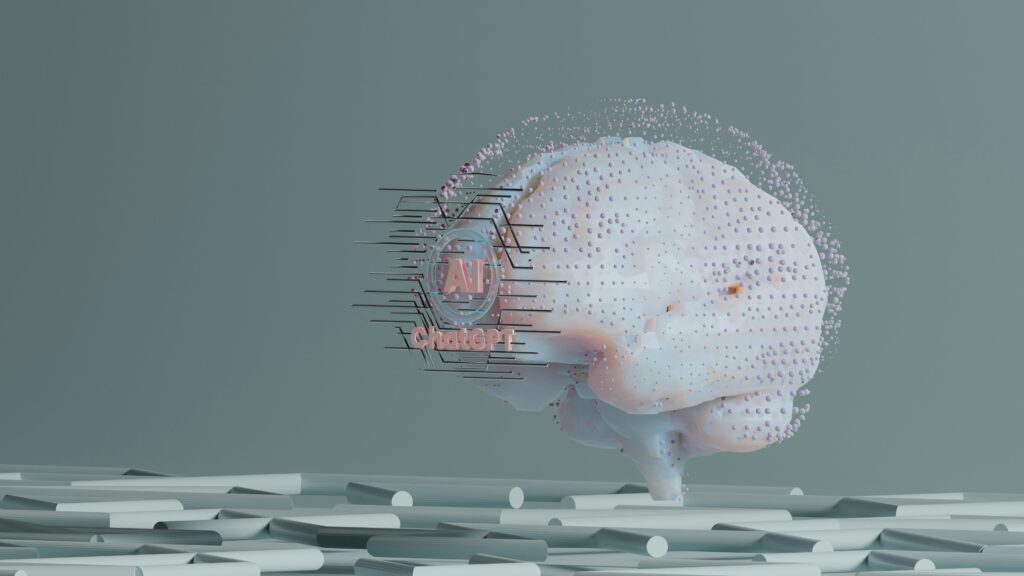
The Rise of Generative AI: Reshaping Creative Workflows
In recent years, Generative AI (Gen AI) has moved from theoretical discussions to practical applications, fundamentally altering how content is conceived, produced, and distributed across various sectors. Tools like OpenAI’s DALL-E and Midjourney have democratized visual art creation, allowing users to generate high-quality images from simple text prompts. More recently, the introduction of advanced models like Sora, capable of creating realistic and imaginative videos from text, announced in February 2024, signals an even deeper integration of AI into complex creative processes. This rapid evolution highlights how intelligent systems are not just automating but augmenting human creativity, pushing the boundaries of what’s possible.
Data-Driven Insights: AI’s Impact on Productivity and Innovation
Numerous studies and industry reports underscore the tangible benefits of Generative AI. According to a McKinsey & Company report published in June 2023, Generative AI has the potential to add trillions of dollars in value to the global economy, primarily by enhancing productivity across various functions, including marketing and sales, software development, and product R&D. Creative industries, in particular, are seeing significant efficiency gains. Artists and designers can iterate on concepts faster, marketers can generate diverse ad copy and visuals at scale, and writers can overcome creative blocks with AI-powered assistance, leading to unprecedented levels of output and personalization.
Industry-Wide Repercussions: Opportunities and Challenges
The impact of Generative AI spans across numerous creative industries, presenting both immense opportunities and significant challenges. For advertising and marketing, Gen AI enables hyper-personalization of campaigns, allowing brands to reach individual consumers with tailored content, increasing engagement and conversion rates. In entertainment, from scriptwriting to special effects, AI is streamlining production timelines and reducing costs, opening doors for independent creators. The gaming industry is leveraging AI for dynamic content generation, character design, and even emergent storytelling.
However, this transformation isn’t without its hurdles. Concerns surrounding copyright and intellectual property remain prominent, particularly when AI models are trained on existing human-created works. Ethical questions about authenticity, bias in AI-generated content, and the potential for job displacement also necessitate careful consideration. Industry leaders and policymakers are grappling with establishing frameworks that balance innovation with protection for human creators and consumers. The discussion now shifts to how human talent can best collaborate with AI, focusing on new roles like ‘prompt engineers’ and ‘AI ethicists’ who guide and refine AI outputs.
Future Predictions: A Collaborative Creative Ecosystem
Experts predict a future where Generative AI acts as a sophisticated co-pilot rather than a sole creator. Gartner’s predictions often highlight the rise of augmented intelligence, where humans and AI work synergistically. The creative process will likely become more iterative and experimental, with AI handling repetitive tasks and generating variations, freeing human creators to focus on strategic vision, emotional depth, and unique conceptualization. We can anticipate the emergence of entirely new forms of media and interactive experiences, driven by AI’s ability to generate dynamic, personalized content on the fly. The future of creative industries will be defined by intelligent systems not just as tools, but as integral partners in the artistic and commercial endeavor.
Embracing the AI-Powered Creative Dawn
Generative AI is undeniably a game-changer for creative industries. While it brings forth complex questions and challenges, its potential to unlock unprecedented levels of efficiency, personalization, and artistic expression is undeniable. Companies that strategically integrate these intelligent systems into their workflows, prioritizing ethical deployment and fostering human-AI collaboration, will be best positioned to thrive in this exciting new era of digital creativity.