
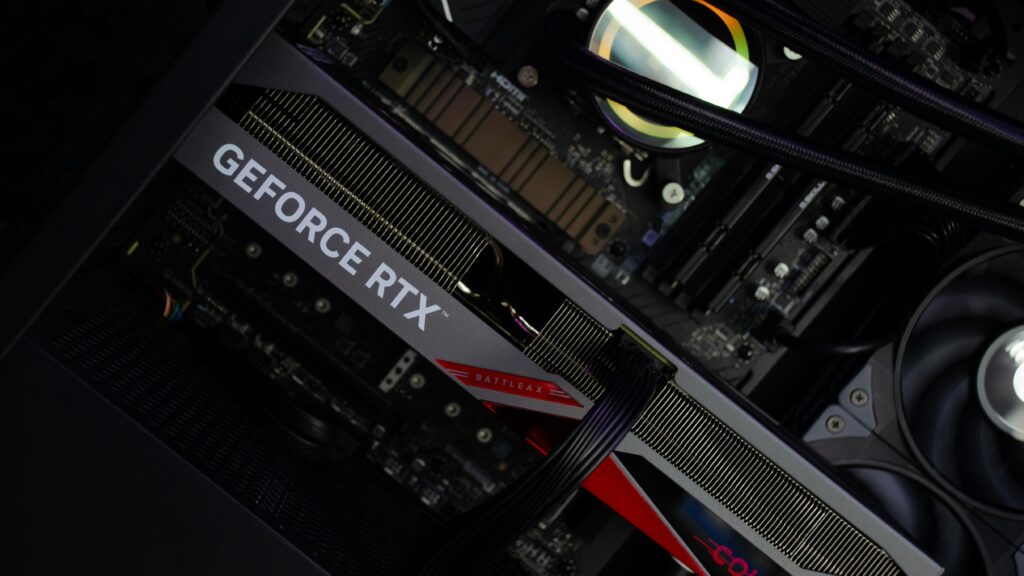
The Dawn of Blackwell: What to Expect from RTX 50 Series
Following the immense success of the Ada Lovelace architecture powering the RTX 40 Series, NVIDIA is reportedly gearing up to introduce its next-generation GPUs built on the Blackwell architecture. Industry insiders and leakers suggest the **NVIDIA RTX 50 Series** will bring significant advancements across the board, from raw processing power to enhanced efficiency. Blackwell is rumored to feature a modular design, potentially offering more scalability and specialized processing units than its predecessors. This fundamental shift in architecture could mean unprecedented leaps in CUDA core counts, RT core performance, and Tensor core capabilities, essential for both gaming and advanced computational tasks.
Early speculation points towards a major overhaul in how these GPUs handle complex graphics workloads, particularly in areas like ray tracing and path tracing, which are becoming increasingly integral to realistic game environments and professional rendering. The new architecture is expected to not only boost raw performance but also deliver greater power efficiency, a crucial factor for high-end hardware. For a deeper dive into current GPU trends, you might find our article on exploring the latest GPU innovations insightful.
Anticipated Specifications and Performance Leaps
Core Architecture Enhancements
The Blackwell architecture is being designed from the ground up to tackle the most demanding applications. Experts predict a substantial increase in core counts, along with architectural refinements that allow for more efficient data processing. This translates directly to higher frame rates in AAA games and faster rendering times in professional applications like Blender, Maya, and CAD software. The rumored advancements in RT and Tensor cores will further cement NVIDIA’s lead in real-time ray tracing and AI-driven upscaling technologies like DLSS, making gaming visuals more immersive and computationally intensive tasks more accessible.
Memory and Bandwidth Revolution
One of the most anticipated upgrades for the RTX 50 Series is the potential adoption of GDDR7 memory. This next-generation memory standard promises a massive leap in bandwidth compared to GDDR6X, which would be critical for feeding the hungry Blackwell GPUs with data at lightning speeds. Higher memory bandwidth is essential for rendering high-resolution textures, complex scenes, and managing the vast datasets required for AI and scientific computing. This move would not only unlock new levels of performance but also ensure the RTX 50 Series is future-proofed for years to come, accommodating the ever-growing demands of software and content.
Furthermore, power efficiency is a key battleground. While performance increases are expected, NVIDIA is also likely focusing on improving performance-per-watt ratios, addressing concerns about power consumption and thermal management in high-end systems. This will be a welcome development for consumers and enterprise users alike, offering powerful hardware without exorbitant energy costs.
Industry Impact and User Experience
The arrival of the **NVIDIA RTX 50 Series** is set to send ripples across multiple industries. For gamers, it means the ability to experience titles at unprecedented resolutions and frame rates, with full ray tracing enabled, creating hyper-realistic worlds. Esports professionals will benefit from the sheer horsepower, ensuring competitive advantages with smoother gameplay. For content creators, including 3D artists, video editors, and animators, these GPUs will drastically cut down render times, enabling faster iteration and more complex projects. From graphic designers using Adobe Creative Suite to architects rendering detailed building models, the productivity gains will be substantial.
Beyond traditional computing, the enhanced Tensor core performance and memory bandwidth will also bolster the capabilities of developers working in AI, machine learning, and data science. These GPUs serve as critical accelerators for training complex models, running simulations, and performing data analytics, further blurring the lines between consumer and professional-grade hardware. According to recent analyses, the competitive landscape in the GPU market is heating up, with new releases like the RTX 50 Series pushing the boundaries for all manufacturers, as noted by Tom’s Hardware’s ongoing coverage on next-gen GPU speculation.
Expert Opinions and Future Predictions
Industry analysts widely predict that the RTX 50 Series will not just be an iterative upgrade but a significant generational leap. Experts like Jon Peddie Research and TechInsights suggest that NVIDIA will leverage its leadership in both hardware and software (e.g., CUDA, DLSS) to solidify its market position. The pricing strategy for the new series will be a critical factor, as will NVIDIA’s ability to maintain supply chain efficiency in a highly demanding market. The introduction of Blackwell is also expected to intensify competition with AMD and Intel, potentially driving further innovation across the entire GPU landscape.
Looking further into the future, the advancements seen in the RTX 50 Series are merely stepping stones. We can expect even greater integration of specialized AI accelerators directly into the GPU silicon, pushing the boundaries of what’s possible in real-time content creation, scientific discovery, and human-computer interaction. The trend towards more efficient, powerful, and versatile graphics processing units is relentless, promising exciting developments for years to come.
Conclusion: A New Era for Visual Computing
The anticipation surrounding the **NVIDIA RTX 50 Series** is well-founded. With the Blackwell architecture, GDDR7 memory, and a host of other rumored improvements, these next-gen GPUs are poised to usher in a new era for visual computing. From delivering unparalleled gaming experiences to accelerating professional workflows and powering future AI innovations, the RTX 50 Series is set to be a game-changer. Keep an eye out for official announcements, as the future of high-performance graphics is just around the corner, promising excitement for enthusiasts and professionals worldwide.