
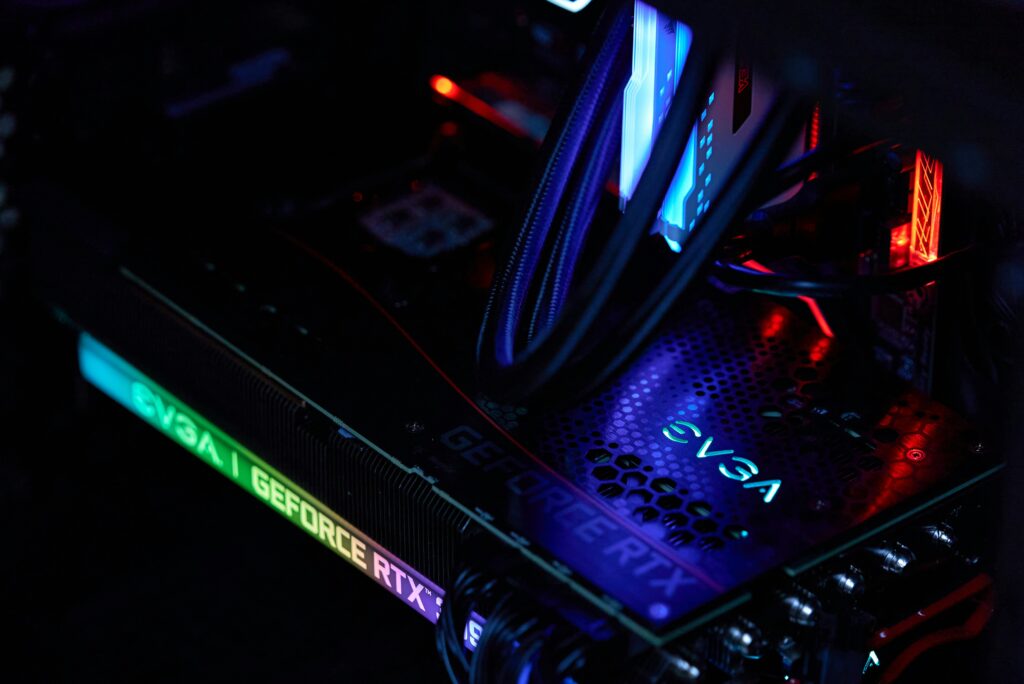
The Dawn of Blackwell: A New Era for Graphics
Following the tremendous success of the Ada Lovelace architecture, which powered the RTX 40-series, NVIDIA is reportedly gearing up to introduce its next-generation GPU architecture, codenamed Blackwell. While official announcements remain under wraps, industry analysts and credible leaks suggest a potential launch window in late 2024 or early 2025. Blackwell is expected to bring substantial advancements over its predecessor, focusing on raw performance, power efficiency, and enhanced capabilities across all core components.
Key rumored improvements for Blackwell include a redesigned Streaming Multiprocessor (SM) architecture, significantly increased core counts, and faster memory subsystems, possibly incorporating GDDR7. These advancements are critical for meeting the ever-growing demands of high-fidelity gaming, real-time ray tracing, and intensive AI workloads. The transition to a more advanced manufacturing process, likely 3nm or 4nm, is also anticipated, which will contribute to greater transistor density and improved energy efficiency.
Architectural Leaps and Power Efficiency
At the heart of Blackwell’s potential revolution are its architectural enhancements. Experts predict improvements in ray tracing (RT) cores, enabling even more realistic lighting and reflections in games and professional renderings. Furthermore, the Tensor Cores, crucial for AI and machine learning tasks, are expected to see significant upgrades, boosting the performance of NVIDIA’s DLSS (Deep Learning Super Sampling) technology and accelerating AI development. This blend of graphical prowess and AI acceleration underscores NVIDIA’s strategy to maintain its leadership in both consumer and professional markets. For more technical insights, you can often find detailed architectural overviews on The Verge’s tech section once new products are officially announced.
Redefining Gaming and Professional Workflows
The impact of NVIDIA Blackwell GPUs is expected to be profound across various sectors. For gamers, the promise of uncompromised performance at 4K and even 8K resolutions, coupled with fluid frame rates and full path tracing capabilities in upcoming titles, is immensely exciting. This new generation will likely set a new standard for visual fidelity and immersion, making current-gen games run effortlessly and paving the way for even more demanding experiences.
Beyond gaming, Blackwell’s enhancements will significantly benefit professional workflows. Content creators, engineers, and researchers will experience dramatic accelerations in tasks such as 3D rendering, video editing, scientific simulations, and data analysis. The improved Tensor Cores will be invaluable for AI and machine learning specialists, enabling faster training times for complex models and more efficient deployment of AI applications, thereby driving innovation across industries.
The Competitive Landscape and Market Impact
Blackwell’s introduction will undoubtedly intensify competition in the GPU market. With AMD also advancing its RDNA architecture, NVIDIA’s new lineup will be crucial for maintaining its market share and technological edge. Pricing strategies, availability, and the overall value proposition will be key factors in consumer adoption. Early indicators suggest a continued focus on premium performance tiers, though mid-range offerings leveraging the new architecture will eventually trickle down to a broader audience. For those considering an upgrade, understanding the market can be complex. You might find our article Choosing Your Next GPU: A Comprehensive Guide helpful.
Expert Outlook and the Road Ahead
Industry analysts foresee Blackwell as a critical driver for the next wave of technological adoption. “Blackwell isn’t just an incremental update; it represents a foundational shift in how GPUs will handle compute and graphics,” states a hypothetical industry expert. “We anticipate it will not only push gaming to photorealistic levels but also democratize access to high-performance AI computation, making it accessible to a wider array of developers and businesses.” This outlook suggests that Blackwell will influence not just the hardware market, but the broader digital ecosystem for years to come.
Conclusion: A Glimpse into Tomorrow’s Tech
The anticipation surrounding NVIDIA’s Blackwell GPUs is palpable, and for good reason. With rumored architectural innovations, significant performance boosts, and enhanced power efficiency, Blackwell is poised to be a game-changer. It promises to unlock new realms of visual fidelity for gamers and provide unprecedented acceleration for professionals, cementing NVIDIA’s position at the forefront of the graphics and compute landscape. As we await official details, one thing is clear: the future of high-performance computing is about to get a whole lot more exciting.