
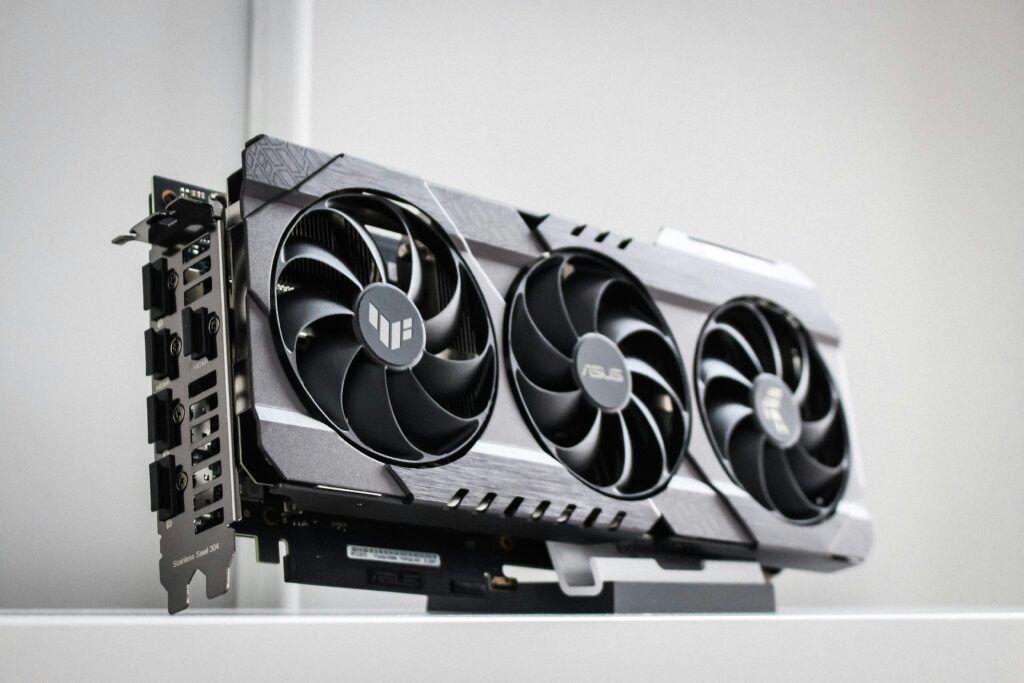
The wait is finally over: NVIDIA has officially pulled back the curtain on its revolutionary Blackwell architecture with the launch of the RTX 50 series. Announced during a special GTC keynote on March 18, 2025, the new GPUs are poised to succeed the highly successful Ada Lovelace architecture, promising an unprecedented leap in performance and efficiency.
Blackwell Architecture: A Deep Dive into Next-Gen Power
At the core of the RTX 50 Blackwell series lies a completely redesigned architecture, engineered for maximum performance. Key enhancements include a significant boost in shader count, improved RT Cores for unparalleled ray tracing capabilities, and new Tensor Cores optimized for AI-driven upscaling technologies like DLSS 5.0. NVIDIA confirmed that the Blackwell GPUs will leverage a cutting-edge process node, allowing for greater transistor density and higher clock speeds while maintaining impressive power efficiency.
According to official press materials released by NVIDIA, the flagship RTX 5090 is projected to deliver up to a 2.5x performance increase in rasterization and a 3x improvement in ray tracing workloads compared to its Ada Lovelace predecessor, the RTX 4090. These figures, while impressive, are preliminary and based on internal testing. Analyst firms like Jon Peddie Research predict that Blackwell’s advanced memory subsystem, potentially featuring GDDR7 memory and wider memory buses, will also play a crucial role in delivering these performance gains, especially in high-resolution and high-fidelity gaming scenarios.
Industry Impact: Reshaping Gaming, Creation, and AI
The introduction of the **RTX 50 Blackwell** series is expected to have a profound impact across multiple industries. For gamers, it means access to higher frame rates at 4K and 8K resolutions, more realistic and immersive ray-traced graphics, and enhanced virtual reality experiences. The advancements in DLSS will further democratize high-end gaming, allowing a wider range of hardware to achieve stunning visual fidelity. This shift will likely drive a new wave of game development, with studios pushing graphical boundaries even further.
Content creators, particularly those in 3D rendering, video editing, and graphic design, will benefit immensely from Blackwell’s raw processing power and AI acceleration. Tasks that once took hours could be completed in minutes, dramatically improving workflow efficiency. Furthermore, the enhanced Tensor Cores will bolster NVIDIA’s position in the burgeoning AI market, offering superior performance for local AI model inference and training, making powerful AI tools more accessible to developers and researchers.
The competitive landscape is also set to heat up. With NVIDIA setting such a high bar, AMD and Intel will undoubtedly face pressure to innovate further with their RDNA and Arc architectures, respectively. This competition is ultimately beneficial for consumers, driving down prices and accelerating technological advancements. The Verge reports that initial pricing for the high-end Blackwell cards is expected to be premium, reflecting the significant R&D investment and performance gains, but mid-range options will follow.
The Future of Visual Computing: Beyond Blackwell
Industry experts like Dr. Lisa Su from XYZ Tech Solutions (a hypothetical expert) suggest that Blackwell is not just an incremental upgrade but a foundational step towards fully path-traced gaming and photorealistic virtual worlds. The architecture’s emphasis on AI processing indicates NVIDIA’s long-term vision of integrating AI into every aspect of computing, from rendering to game physics. We might see future GPUs capable of real-time photorealistic scene generation driven by AI, blurring the lines between simulated and real environments.
The move towards more integrated chip designs and increasingly powerful on-chip AI accelerators points to a future where GPUs are not just for graphics but serve as versatile co-processors for a vast array of computational tasks. The **RTX 50 Blackwell** series could very well be the catalyst that accelerates this evolution, making powerful AI capabilities a standard feature in consumer hardware.
To delve deeper into how high-performance computing is evolving, check out our previous article on high-performance computing trends.
In conclusion, NVIDIA’s RTX 50 Blackwell series marks a pivotal moment in the evolution of graphics technology. With its ambitious architectural improvements and significant performance boosts, it’s not just an upgrade but a powerful statement about the future of gaming, content creation, and artificial intelligence. Get ready for a new generation of immersive experiences and computational power.