
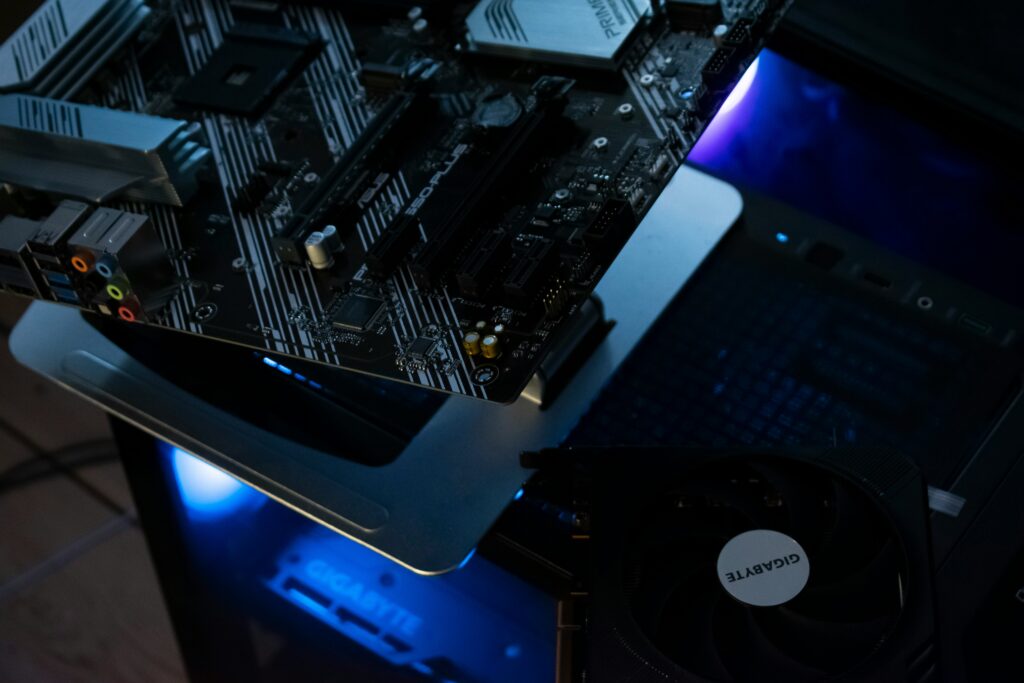
NVIDIA made headlines at its annual GTC keynote earlier this week, lifting the veil on its much-anticipated next-generation GeForce RTX 5000 Series graphics cards. Built upon the revolutionary Blackwell architecture, these new GPUs are poised to redefine high-performance computing, promising to push the boundaries of gaming realism and accelerate professional workflows to an extent previously unimaginable. While specific SKUs like the rumored RTX 5090 and RTX 5080 are expected to launch in phases later this year, the initial reveal outlined a future where stunning graphics and intelligent processing converge.
The Blackwell Architecture: A Quantum Leap
At the heart of the RTX 5000 Series lies the Blackwell architecture, a testament to NVIDIA’s relentless pursuit of innovation. This new design boasts significant advancements across all core components. The new Streaming Multiprocessors (SMs) are engineered for greater efficiency and raw computational power. More impressively, the 4th-generation RT Cores are expected to deliver up to 3 times faster ray tracing performance compared to the previous Ada Lovelace generation, making cinematic realism in games not just possible, but potentially commonplace. Furthermore, the 5th-generation Tensor Cores have been dramatically enhanced, offering increased throughput for AI and machine learning tasks, which are increasingly vital for features like DLSS (Deep Learning Super Sampling) and creative applications.
NVIDIA’s presentation highlighted staggering performance figures, with internal benchmarks suggesting the top-tier RTX 5000 series cards could offer up to a 2x increase in traditional rasterization performance and an astounding 3x boost in ray tracing capabilities in demanding titles. This generational leap is also fueled by the adoption of cutting-edge GDDR7 memory, providing higher bandwidth and improved efficiency, ensuring that the GPU can feed its powerful cores with data at breakneck speeds.
Industry Impact and Expert Insights
Reshaping the Gaming Landscape
The immediate and most significant impact of the RTX 5000 Series will undoubtedly be felt in the gaming community. With such a dramatic increase in performance, game developers will be empowered to create even more immersive and visually stunning worlds. Full path tracing, a holy grail for realistic lighting, could finally become a mainstream reality, offering unparalleled visual fidelity without crippling frame rates. Gamers can anticipate consistently smooth 4K gameplay, even with all graphical settings maxed out and advanced ray tracing enabled. This new hardware also paves the way for higher refresh rate displays to truly shine, delivering an ultra-responsive gaming experience.
Empowering Creative Professionals and AI Developers
Beyond gaming, the RTX 5000 Series will be a game-changer for creative professionals. Artists, designers, and animators will experience drastically reduced rendering times in applications like Blender, Maya, and OctaneRender. Video editors will benefit from accelerated encoding and effects processing, while engineers and architects can perform real-time simulations and visualize complex designs with unprecedented detail. The enhanced 5th-gen Tensor Cores are particularly exciting for AI and machine learning developers. The increased computational power for AI workloads means more accessible local model training, faster inference, and the potential for a new era of AI-accelerated tools that can augment human creativity and productivity.
“Blackwell is not just a generational leap; it’s a paradigm shift,” remarked NVIDIA CEO Jensen Huang during the unveiling, underscoring the company’s vision for the architecture to permeate far beyond just gaming. Analysts from various tech research firms echo this sentiment, predicting that the RTX 5000 Series will drive a significant refresh cycle for PC enthusiasts and professionals alike, further solidifying NVIDIA’s market dominance in high-end graphics. For more on the ongoing GPU wars between industry giants, check out our previous coverage.
The Future of Graphics: A Glimpse Ahead
The introduction of the NVIDIA RTX 5000 Series with Blackwell architecture isn’t merely an incremental upgrade; it’s a bold statement about the future of real-time graphics and artificial intelligence. Experts believe this generation of GPUs could define the graphical fidelity and computational capabilities of the next three to five years. The immense power unlocked by these cards also has profound implications for the burgeoning fields of virtual and augmented reality, enabling more immersive, high-resolution, and physically accurate experiences than ever before. It sets a new benchmark that competitors like AMD and Intel will undoubtedly strive to match, fostering an environment of rapid innovation across the entire hardware industry.
As we move towards increasingly complex digital worlds and more intelligent applications, the foundation laid by the RTX 5000 Series will be crucial. This technology is expected to unlock new paradigms in game development, scientific visualization, and even everyday computing, making once-futuristic concepts a tangible reality.
Conclusion
NVIDIA’s unveiling of the RTX 5000 Series marks a monumental moment in the evolution of consumer graphics and AI hardware. With its groundbreaking Blackwell architecture, these GPUs promise to deliver unparalleled performance and capabilities that will excite gamers, empower creators, and accelerate scientific discovery. The digital world is about to become more vibrant, more interactive, and more intelligent thanks to this revolutionary hardware. For further insights into the latest tech innovations, you can always rely on sources like The Verge.