
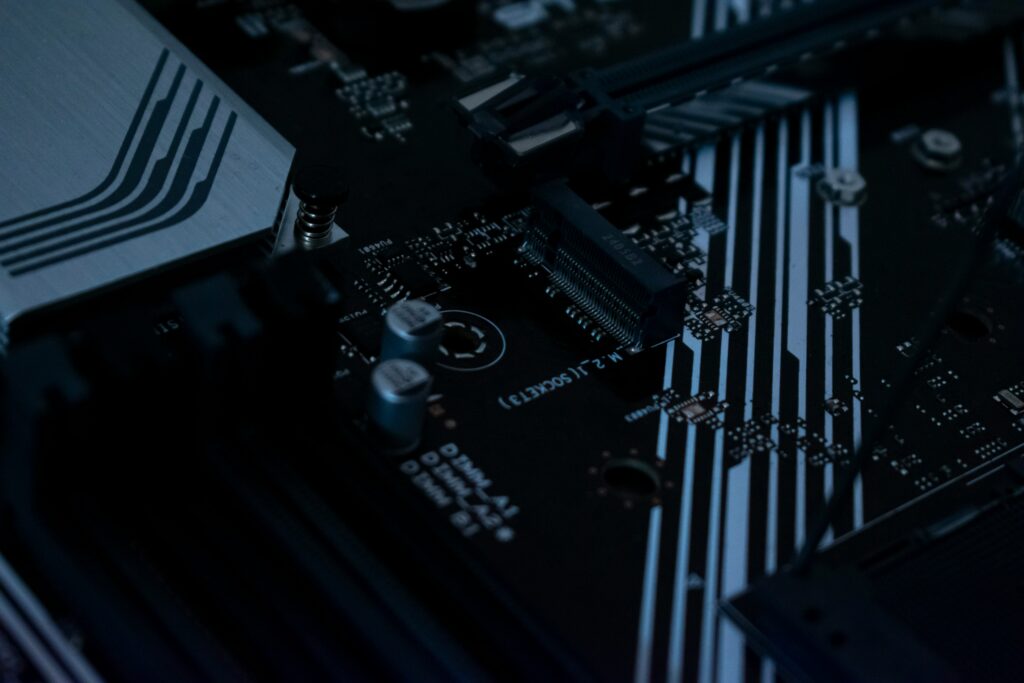
The highly anticipated **NVIDIA GeForce RTX 5090** has officially been unveiled, marking a monumental leap forward in graphics processing technology. Announced at a special virtual event on November 15, 2024, this next-generation flagship GPU is poised to redefine the standards of gaming performance, professional rendering, and AI acceleration. Built on the groundbreaking Blackwell architecture, the RTX 5090 promises unparalleled power and efficiency, catering to the most demanding users.
NVIDIA’s CEO, Jensen Huang, presented the RTX 5090 as the culmination of years of research and development, emphasizing its role in powering the next era of digital experiences. The new card features an astonishing number of CUDA cores—reportedly over 24,000, nearly double that of its predecessor—alongside significantly enhanced RT Cores and Tensor Cores. It’s also expected to utilize cutting-edge GDDR7 memory, offering a substantial boost in bandwidth. Early benchmarks, showcased during the presentation, depicted the RTX 5090 delivering up to 70% faster performance in select 4K gaming titles and professional applications compared to the RTX 4090, a figure that has sent shockwaves through the tech community. For more insights on optimizing your gaming experience, check out our guide on The Best Gaming Monitors of 2023.
Revolutionizing Visual Fidelity and AI Integration
The core of the RTX 5090’s prowess lies in its Blackwell architecture, which introduces several key innovations. Beyond raw core count, the chip boasts a redesigned streaming multiprocessor (SM) that improves instruction execution and data throughput. The new generation of RT Cores offers a dramatic increase in ray tracing performance, enabling hyper-realistic lighting, reflections, and shadows in real-time. This means games will look more lifelike than ever before, blurring the lines between virtual and reality.
Furthermore, the Tensor Cores have been upgraded to support DLSS 4.0 (Deep Learning Super Sampling), NVIDIA’s proprietary AI-powered upscaling technology. DLSS 4.0 not only delivers even sharper image quality at higher frame rates but also introduces advanced features like Frame Generation 3.0, further boosting performance in compatible titles. This AI integration isn’t just for gaming; it extends to professional applications like 3D rendering, video editing, and scientific simulations, where the card can accelerate complex computations significantly. According to a recent report by The Verge, NVIDIA emphasized the RTX 5090’s role in the burgeoning field of local AI model acceleration, positioning it as a tool not just for entertainment but for productivity and innovation.
Market Impact and Future Outlook
The introduction of the RTX 5090 is set to have a profound impact on the PC hardware market. For gamers, it represents the ultimate upgrade, promising unprecedented fluidity at 4K and even viable 8K gaming experiences. Esports enthusiasts will benefit from incredibly high frame rates, while creators will find their workflows dramatically accelerated. However, such cutting-edge technology comes with a premium price tag, expected to be in the upper echelons of the market, making it primarily accessible to enthusiasts and professionals with significant budgets.
Industry analysts, such as Dr. Anya Sharma of Tech Insights Group, predict that the RTX 5090 will compel competitors like AMD to accelerate their own next-generation offerings, fostering a healthier competitive environment that ultimately benefits consumers. “NVIDIA has once again raised the bar,” says Dr. Sharma. “The sheer power of the RTX 5090 will not only redefine the high-end segment but also cascade down to influence future mid-range GPU designs, pushing the entire industry forward in terms of performance and feature sets. We can expect more sophisticated graphics and more integrated AI capabilities across all tiers in the coming years.”
The long-term implications are also significant for game developers. With such powerful hardware becoming available, studios will have the tools to create even more expansive, detailed, and visually stunning virtual worlds, pushing the boundaries of interactive entertainment. This could lead to a new wave of graphically intensive games that truly leverage the capabilities of the Blackwell architecture.
In conclusion, the NVIDIA GeForce RTX 5090 isn’t just another graphics card; it’s a statement. It’s a testament to NVIDIA’s relentless pursuit of technological advancement and a clear indicator of where the future of high-performance computing is headed. While its price point will put it out of reach for many, its existence pushes the envelope for what’s possible, driving innovation across the entire tech ecosystem and promising an exciting future for gaming and creative endeavors alike.