
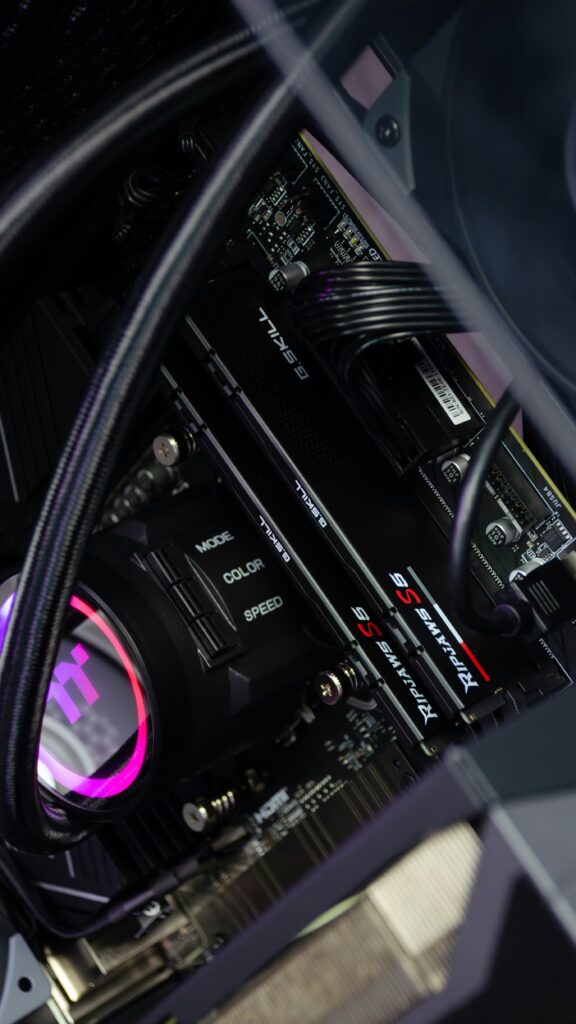
NVIDIA, a dominant force in the graphics processing unit (GPU) market, is reportedly preparing to unleash its next-generation architecture, codenamed Blackwell. Following the success of Ada Lovelace (consumer GPUs like RTX 40 series) and Hopper (data center GPUs), Blackwell is rumored to merge the best of both worlds, offering unprecedented advancements for both gamers and enterprise AI applications. While an official launch date remains under wraps, industry whispers and analyst predictions point towards a late 2024 or early 2025 debut, making it one of the most exciting hardware innovations on the horizon.
Breaking Down the Blackwell Architecture Hype
Early reports and patent filings suggest that Blackwell will build upon the multi-chip module (MCM) design, potentially allowing for greater scalability and performance density. This approach, which AMD has successfully utilized with its MI300 series, enables more processing power to be packed into a single chip, overcoming the physical limitations of monolithic die designs. For consumers, this could translate to graphics cards offering significantly higher core counts, memory bandwidth, and overall compute power compared to the current RTX 40 series.
Furthermore, Blackwell is expected to feature enhanced RT Cores for superior ray tracing performance and improved Tensor Cores, crucial for accelerating AI workloads. The integration of cutting-edge manufacturing processes, likely TSMC’s 3nm or a refined 4nm node, will be key to achieving higher clock speeds and greater power efficiency, addressing some of the thermal and power consumption concerns seen in previous generations. Official statements from NVIDIA regarding their GPU roadmap have historically hinted at continuous innovation, though specific details on Blackwell remain highly speculative until an official unveiling. However, the company’s consistent pattern of generational leaps supports the high expectations.
Industry Impact: Gaming, AI, and Beyond
The arrival of NVIDIA Blackwell GPUs will undoubtedly send ripples across multiple sectors. For the gaming industry, it means a new era of visual fidelity and performance. Games will be able to push the boundaries of realism, with more complex ray-traced lighting, shadows, and reflections running at higher frame rates and resolutions. This could also accelerate the adoption of new rendering technologies and virtual reality experiences, making them more immersive and accessible.
Beyond gaming, Blackwell’s impact on artificial intelligence and data centers will be profound. With vastly improved Tensor Core performance and potentially new AI acceleration features, Blackwell-based GPUs will be instrumental in training larger, more complex AI models faster and more efficiently. This will benefit fields ranging from scientific research and medical imaging to autonomous driving and large language models, driving further innovation in AI applications. The increased power and efficiency could also lead to more compact and powerful workstations for content creators, engineers, and researchers.
Future Predictions and Expert Opinions
Analysts are predicting that Blackwell could represent one of NVIDIA’s most significant generational leaps in recent memory. Industry experts like Jon Peddie, a veteran analyst in the graphics market, often emphasize the relentless pace of GPU development and the increasing convergence of gaming and professional workloads. The potential for Blackwell to significantly reduce the cost-per-teraflop in AI computing could democratize access to high-performance AI, enabling smaller companies and researchers to innovate more freely.
Market watchers also anticipate fierce competition, particularly from AMD’s continued push with its RDNA and CDNA architectures. However, NVIDIA’s strong ecosystem, including CUDA and its robust software stack, gives it a significant advantage, particularly in the professional AI space. The pricing strategy for Blackwell will be critical, as high prices for the current generation have been a point of contention for many consumers. Nevertheless, the promise of a true next-gen leap often justifies a premium for early adopters and performance enthusiasts.
For more insights into the competitive landscape of the GPU market, you can refer to recent analyses from major tech publications, such as The Verge’s coverage on NVIDIA’s AI dominance and future plans.
A Glimpse into Tomorrow’s Tech
NVIDIA’s Blackwell architecture stands as a testament to the relentless innovation driving the tech world. It promises not just faster graphics or quicker AI computations, but a fundamental shift in what’s possible across various digital domains. As we edge closer to its official reveal, the excitement continues to build for what could be a truly game-changing release, pushing the boundaries of technology and setting new benchmarks for the years to come.