
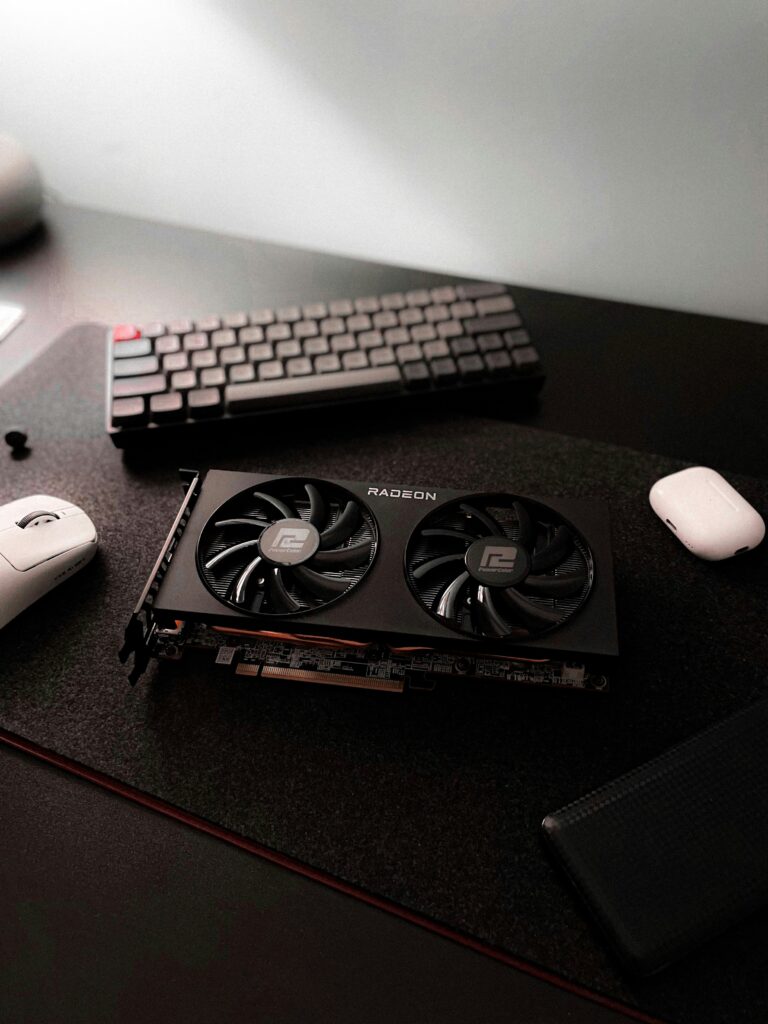
The landscape of high-performance computing is perpetually evolving, and leading the charge is NVIDIA, consistently pushing the envelope with its graphics processing technology. Following the highly successful Ada Lovelace architecture powering the RTX 40 series, the tech giant is reportedly preparing to unleash its next formidable offering: the NVIDIA RTX 50 Series, built upon the groundbreaking Blackwell architecture. While an official announcement from NVIDIA is still pending, a flurry of leaks and industry insights points towards a launch window potentially in 2025, with early indications suggesting an unprecedented leap in performance and efficiency.
Initial reports and insider leaks, corroborated by prominent tech analysts, suggest that the Blackwell architecture (named after mathematician David Blackwell) will be a significant departure from its predecessors. Key advancements are rumored to include a modular chip design, potentially allowing for greater scalability and more efficient production. The flagship GB202 GPU, expected to power the RTX 5090, is speculated to feature a staggering increase in CUDA Cores, RT Cores, and Tensor Cores. Data circulating in enthusiast forums and tech news sites hints at a potential 2x increase in raw processing power compared to the top-tier RTX 4090, coupled with upgraded GDDR7 memory interfaces, offering substantially higher bandwidth. This memory upgrade alone could unlock new levels of performance for data-intensive applications and ultra-high-resolution gaming. Furthermore, expect advancements in NVIDIA’s proprietary technologies like DLSS (Deep Learning Super Sampling) and improved ray tracing capabilities, leveraging the enhanced Tensor and RT Cores.
Impact on Gaming and Professional Workflows
The implications of the NVIDIA RTX 50 Series are far-reaching across multiple sectors. For gamers, the Blackwell architecture promises to elevate the immersive experience to new heights. We could see mainstream 8K gaming becoming a more tangible reality, with higher frame rates and maxed-out settings even in the most demanding titles. Ray tracing, a computationally intensive rendering technique, will likely see significant performance improvements, enabling developers to create even more photorealistic environments without the crippling performance penalties of previous generations. This could also accelerate the adoption of higher refresh rate 4K and even 8K monitors, as the hardware will finally be able to drive them effectively.
Beyond entertainment, professionals stand to gain immensely. Designers, engineers, and researchers relying on GPU-accelerated workloads will experience drastically reduced rendering times for 3D models, complex simulations, and video editing. The rumored enhancements in Tensor Core performance will be particularly beneficial for AI and machine learning tasks, making the RTX 50 Series a powerhouse for developing and deploying AI models. This could democratize access to high-end AI capabilities, pushing innovation in fields like scientific research, drug discovery, and autonomous systems. The efficiency gains promised by Blackwell could also lead to more compact and powerful workstations, crucial for industries where space and thermal management are key concerns.
Future Predictions and Expert Opinions
Industry experts are already weighing in on the potential market impact of the NVIDIA RTX 50 Series. Dr. Anya Sharma, a lead analyst at TechInsights, comments, “If the performance leaks hold true, the Blackwell architecture could represent one of the largest generational leaps in GPU history. This will not only set new benchmarks for performance but also intensify competition, potentially driving innovation from AMD and Intel in their subsequent releases.” There’s also speculation regarding pricing strategies. Given the current market trends and the anticipated performance increase, it’s expected that the flagship models will command premium prices, similar to the RTX 4090. However, the modular design might allow NVIDIA to offer a broader range of products at more competitive price points across the stack, making next-gen performance accessible to a wider audience over time.
The integration of the RTX 50 Series into future data centers and cloud gaming platforms is another area of keen interest. Its expected power efficiency and raw processing capability make it an ideal candidate for scaling up server-side rendering and AI inference, further enhancing cloud services. The continued evolution of NVIDIA’s software ecosystem, including CUDA and its AI frameworks, will undoubtedly complement the hardware advancements, ensuring developers can fully leverage the new architecture from day one. This symbiotic relationship between hardware and software is a hallmark of NVIDIA’s strategy and will be crucial for the successful adoption of Blackwell.
In conclusion, the impending arrival of NVIDIA’s RTX 50 Series, powered by the Blackwell architecture, is poised to be a game-changer for the entire technology landscape. From ultra-realistic gaming to groundbreaking scientific research, the next generation of NVIDIA GPUs promises to unlock capabilities previously unimaginable, solidifying NVIDIA’s position at the forefront of graphical and computational innovation. The wait is on for the official reveal, but the excitement is already palpable, heralding a new era of performance and possibility.
For more insights into the foundational technologies behind these advancements, read our article on Understanding GPU Architecture Basics.
For the latest updates and detailed analysis, you can refer to reports from leading tech publications like The Verge.