
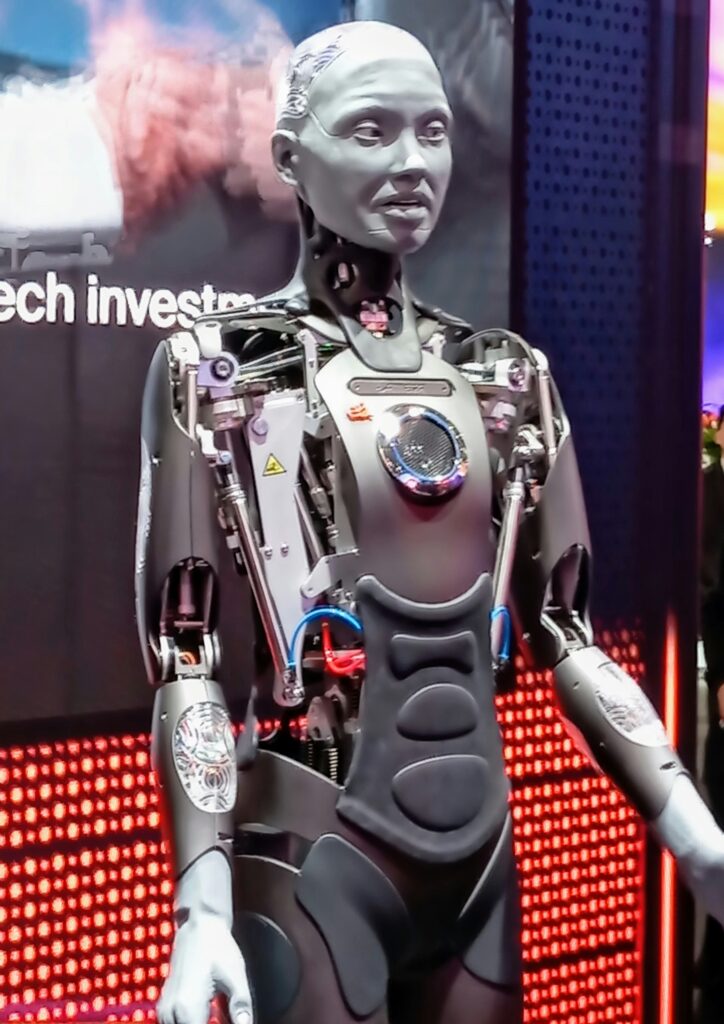
In an era demanding unparalleled productivity and precision, artificial intelligence (AI) is no longer a futuristic concept but a vital operational tool for modern manufacturers. The last few years have seen a surge in the implementation of AI-driven solutions, moving beyond mere automation to intelligent systems that learn, adapt, and predict. Recent announcements from industry leaders at major tech summits highlight the rapid deployment of AI platforms capable of real-time process control, defect detection, and resource allocation. This strategic integration is rapidly becoming the new standard for achieving competitive advantage in complex global supply chains. The momentum suggests that by the end of the decade, a significant portion of the world’s leading manufacturers will have fully integrated AI into their core operations.
Studies and industry reports underscore the transformative power of AI in this domain. According to a recent report by Deloitte, companies leveraging AI in manufacturing have reported up to a 20% increase in production output and a 15% reduction in operational costs. Furthermore, research from McKinsey reveals that predictive maintenance, powered by machine learning algorithms, can decrease unplanned downtime by up to 50% and extend asset lifespan by 20-40%. These figures are not mere theoretical projections but reflect tangible gains experienced by early adopters. Dr. Lena Khan, a lead researcher in industrial AI at Stanford University, recently stated, “AI’s ability to process vast datasets from sensors, robotics, and production logs allows for insights that human analysis simply cannot uncover at scale. It’s about prescriptive intelligence – not just what happened, but what will happen and what should be done.”
Transforming Production: Precision, Quality, and Agility
The impact of AI manufacturing optimization resonates across multiple facets of industrial production. Firstly, in quality control, AI-powered vision systems can identify microscopic defects with far greater accuracy and speed than human inspectors, ensuring consistent product quality and reducing waste. Secondly, in demand forecasting and supply chain management, machine learning models analyze historical data, market trends, and even social media sentiment to predict demand with remarkable precision, leading to optimized inventory levels and reduced stockouts. This precision directly benefits consumers through more consistent product availability and potentially lower costs due to reduced inefficiencies.
Moreover, AI is revolutionizing the factory floor through predictive maintenance. Sensors embedded in machinery continuously feed data to AI algorithms, which identify patterns indicative of impending equipment failure. This allows maintenance teams to perform timely interventions, preventing costly breakdowns and minimizing production interruptions. Beyond maintenance, AI also plays a crucial role in optimizing robot movements and task assignments, enhancing collaborative robotics, and ensuring worker safety by predicting hazardous conditions. The ability to adapt quickly to changing market demands, known as agility, is also dramatically improved as AI systems can rapidly reconfigure production lines and processes based on new specifications or order volumes.
For more insights into how intelligent systems are reshaping various sectors, you can read our article on Enterprise AI Solutions Transforming Business.
The Future is Autonomous and Intelligent
Looking ahead, experts predict an accelerated march towards fully autonomous “lights-out” factories where AI and robotics manage entire production cycles with minimal human intervention. While this raises questions about job displacement, many envision a future of augmented human capabilities, where AI handles repetitive tasks, allowing human workers to focus on innovation, strategic oversight, and complex problem-solving. The integration of generative AI in product design, allowing for rapid prototyping and simulation, is also gaining traction, promising to shorten development cycles and foster unprecedented innovation. Major investments continue to pour into this sector; for example, TechCrunch recently reported on the significant capital flowing into AI startups specializing in industrial applications, signaling robust confidence in its long-term potential.
The challenges, of course, include the significant upfront investment, the need for skilled talent to manage and develop these systems, and ethical considerations surrounding data privacy and autonomous decision-making. However, the benefits in terms of efficiency, sustainability, and competitive advantage are proving too compelling for industries to ignore. Companies that embrace these intelligent systems early are positioning themselves as leaders in the next industrial revolution.
Conclusion
The journey towards an AI-optimized manufacturing landscape is well underway, fundamentally altering how goods are produced and delivered worldwide. From enhancing quality control and streamlining supply chains to enabling predictive maintenance and fostering greater agility, AI is proving to be an indispensable asset. As intelligent systems continue to evolve, their capacity to drive innovation and efficiency will only grow, cementing their role as the true game-changer for the future of industry.