
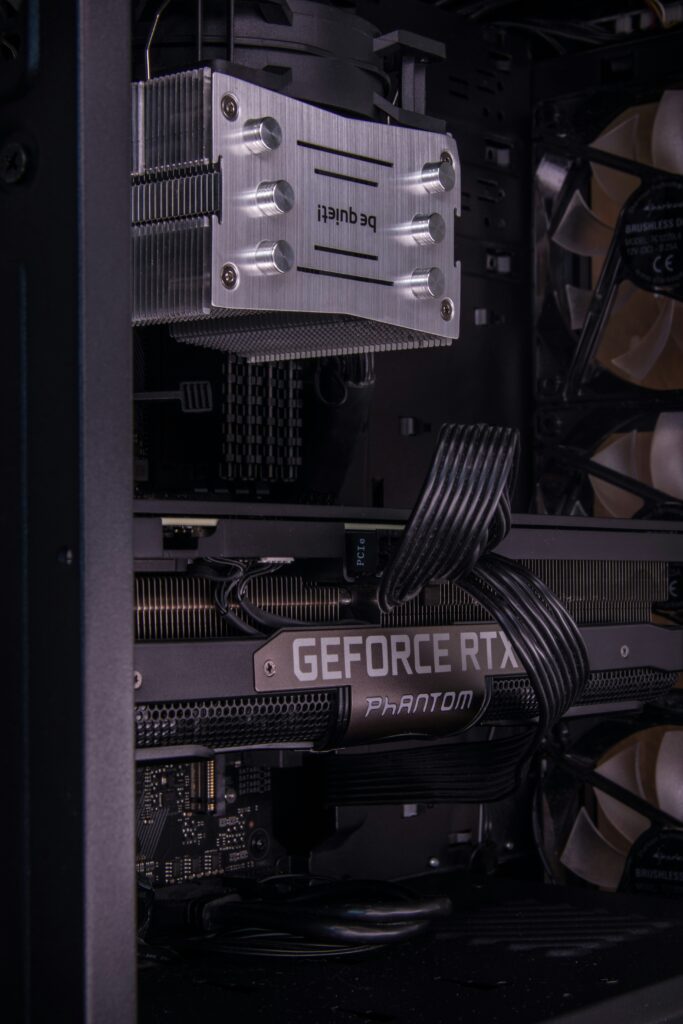
In a highly anticipated virtual event on October 24, 2024, NVIDIA officially unveiled the GeForce RTX 5090, marking a significant leap forward in graphics processing technology. Built on the brand-new Blackwell architecture, the RTX 5090 boasts an astonishing 24,576 CUDA Cores, a substantial increase over its predecessor, the RTX 4090. Paired with 32GB of GDDR7 VRAM across a 512-bit memory interface, this beast promises unparalleled bandwidth and processing power for the most demanding applications and games.
Initial benchmarks, provided by NVIDIA, demonstrate a performance uplift of up to 2x in rasterization and 3x in ray tracing workloads compared to the RTX 4090. During the announcement, Jensen Huang, NVIDIA’s CEO, stated, “The RTX 5090 is not just an upgrade; it’s a complete reimagining of what’s possible in graphics. We’ve pushed every single boundary, from core architecture to memory speed, to deliver an experience that truly feels next-generation.” The new Tensor Cores and RT Cores, enhanced for faster AI computations and more realistic lighting, further solidify its position as a technological marvel. The card’s power efficiency, despite its immense performance, has also seen improvements, with a target TGP of 550W.
Dramatically Reshaping Gaming & Creative Industries
The immediate impact of the RTX 5090 is expected to be profound, particularly for high-end gamers and professional content creators. For gamers, this means unlocking true 8K gaming at high refresh rates with all graphical settings maxed out, even with demanding ray tracing enabled. Titles that once struggled to maintain stable frame rates will now run seamlessly, offering an immersive experience previously unattainable. Furthermore, its advanced ray tracing capabilities will enable developers to create even more lifelike environments and visual effects, setting a new standard for realism in video games.
For professionals in fields like 3D rendering, video editing, and AI development, the RTX 5090 translates to dramatically reduced render times and faster processing of complex datasets. Architects can render intricate models in real-time, filmmakers can accelerate their post-production workflows, and AI researchers can train larger models with greater efficiency. This acceleration will not only boost productivity but also foster new creative possibilities across various industries. The competitive landscape for other GPU manufacturers like AMD and Intel will also intensify, as they now face a new benchmark to surpass.
Expert Outlook & Future Implications
Industry analysts are largely optimistic about the RTX 5090’s impact, though its anticipated price point of around $1999-$2199 USD suggests it will remain a premium product. Dr. Eleanor Vance, a leading tech analyst at TechInsights, commented, “The RTX 5090 isn’t just a win for NVIDIA; it’s a win for high-performance computing. It pushes the entire industry forward, forcing innovation and setting new expectations for graphical fidelity and processing power. We can expect to see a cascade effect, with future console generations and competitive GPUs striving to match its capabilities.” The adoption of GDDR7 memory and the Blackwell architecture signifies a new era, hinting at what could become standard in mainstream GPUs in the coming years. This also suggests that future software and game development will increasingly leverage these advanced hardware capabilities, leading to more graphically intensive and AI-powered experiences.
Looking ahead, the RTX 5090’s launch will inevitably spark discussions around power consumption standards, cooling solutions, and the sustainability of high-end hardware. It also sets the stage for future competitive responses, with rivals likely to accelerate their own next-generation architectures. The ultimate winner, however, will be the consumer, as this intense competition drives further innovation and performance enhancements across the board.
The NVIDIA GeForce RTX 5090 represents a monumental achievement in graphics technology. It’s a device that doesn’t just improve on its predecessors but fundamentally redefines the limits of what a consumer-grade GPU can accomplish. As we enter this new era of visual computing, the RTX 5090 stands as a testament to relentless innovation and a beacon for the future of digital experiences.
For more insights into the latest GPU technologies, check out our article on The Best Gaming GPUs of 2023. You can also read more about the announcement details from reliable sources like TechCrunch Hardware.